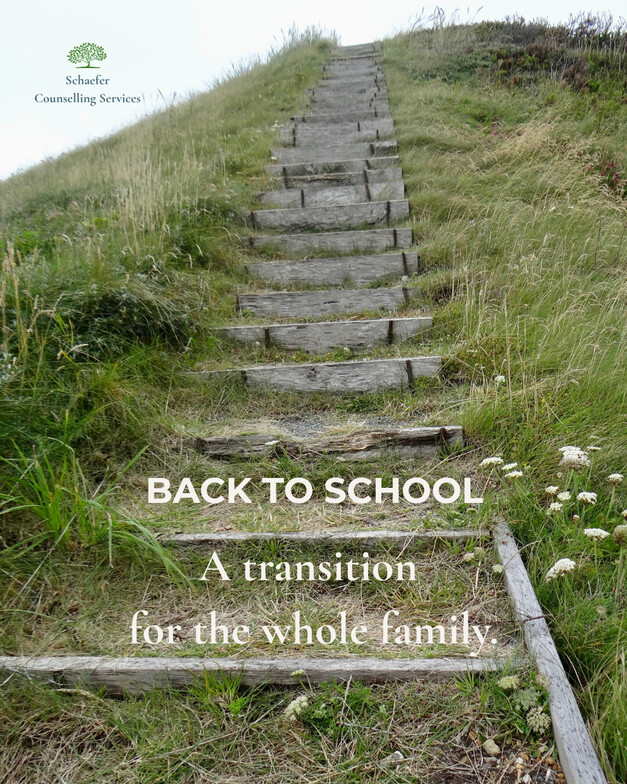
The return to school is a transition for the whole family—not just the student.
Whether you’re supporting a child starting a new grade, a teen navigating high school, or a young adult heading off to post-secondary, a new school year brings a shift. It can bring excitement, uncertainty, changing routines, new expectations, and a full spectrum of emotions.
For parents and caregivers, it can mean adjusting schedules, shifting responsibilities, and navigating changes in family dynamics as everyone finds their new rhythm.
Transitions take time, and every family adjusts differently.
Finding a New Rhythm
The beginning of a school year can bring pressure to have everything organized and running smoothly right away. But adjustment rarely happens overnight.
Mornings may be challenging. Routines may need to be changed. Someone who was excited about the new school year may become overwhelmed once things get underway. Parents and caregivers may find themselves feeling stressed or stretched as they adjust alongside their children.
These experiences don't necessarily mean something is wrong. Adjustment is part of transition.
Rather than expecting everything to go smoothly, it can help to approach this season with curiosity and flexibility:
What is working for us right now?
What isn't working?
What might we need to change?
Connection Matters
When schedules become busy, family conversations can easily become focused on logistics—homework, activities, meals, transportation, and getting out the door.
Making space to ask how someone is actually doing can help maintain connection during times of change.
Children, teens, and young adults may each need something different. Some may want to talk openly, while others may need more space before they're ready to share. Staying available, listening without immediately trying to fix things, and letting family members know they can come to you can make a meaningful difference.
And connection isn't only important for students. Parents and caregivers need support, too.
Your Wellbeing Matters, Too
Supporting a family through transition can be demanding. It is easy to focus so much on everyone else's needs that your own wellbeing gets pushed aside.
Making space for rest, supportive relationships, and your own emotional needs isn't selfish. It can help you have more capacity for the people you care about.
Sometimes, taking care of your family also means taking care of yourself.
When Support May Help
Some stress and disruption are a normal part of adjusting to change. But if anxiety, stress, family tension, withdrawal, or overwhelm persist, additional support may be helpful.
Counselling can provide a supportive space for children, teens, young adults, parents, and caregivers to explore what they are experiencing, strengthen communication, and navigate change together.
You don't have to wait until things reach a crisis point to reach out. Sometimes, counselling is simply a place to pause, reflect, and find a way forward.
Finding Your Way Into the New Season
A new school year doesn't have to begin perfectly.
Give yourself and your family permission to adjust, connect, and find your new rhythm together.
Every family navigates transition differently. What matters is making space for what each person needs along the way.
And if the transition brings ongoing stress, anxiety, family tension, or overwhelm, you don't have to navigate it alone. Reaching out for support can help you and your family find greater steadiness and connection.

Annika Schaefer
Contact Me