Sleep is not simply a pause at the end of the day. It is restoration. It is regulation. It is one of the most foundational pillars of mental and emotional wellbeing.
On World Sleep Day, we’re reminded that quality sleep affects far more than our energy levels. It influences how we manage stress, regulate emotions, think clearly, and cope with the demands of daily life. When sleep is steady and restorative, we tend to feel more resilient. When sleep is disrupted, anxiety can feel louder, moods can shift more easily, and even small stressors may feel overwhelming.
Understanding the connection between sleep and mental health is an important step toward sustainable wellbeing.
How Sleep Impacts Mental Health
During sleep, the brain is far from inactive. It processes emotions, consolidates memories, and restores cognitive functioning. Adequate sleep supports:
- Emotional regulation
- Focus and concentration
- Stress tolerance
- Problem-solving ability
- Patience and relational capacity
When sleep is insufficient or inconsistent, we often notice:
- Increased irritability
- Heightened anxiety
- Low mood
- Difficulty concentrating
- Reduced coping capacity
Sleep and mental health have a bidirectional relationship. Anxiety and stress can interfere with sleep, and disrupted sleep can intensify anxiety and low mood. This cycle can feel frustrating — but it is also workable.
Small, intentional changes can interrupt the cycle.
Five Supportive Habits for Better Sleep
Improving sleep does not require perfection. It begins with consistency and gentle structure. Here are five practical areas to focus on:
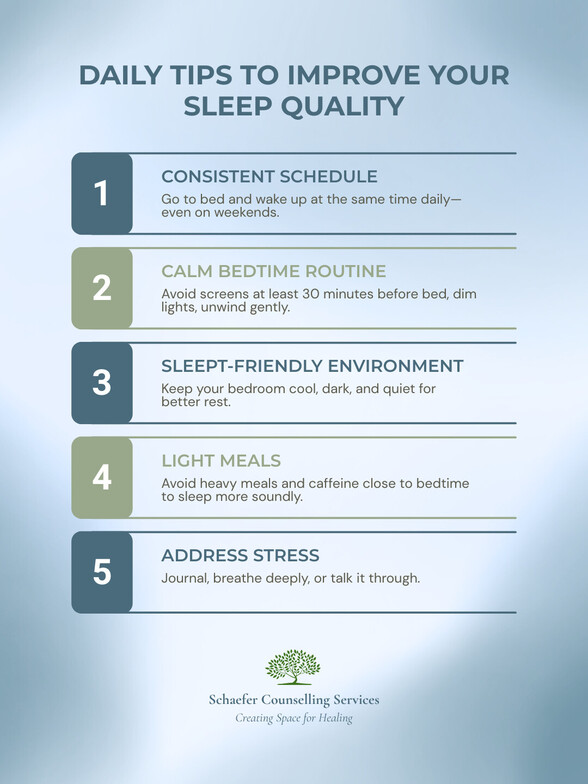
1. Keep a Consistent Schedule
Going to bed and waking up at the same time each day helps regulate your body’s internal clock. Even on weekends, maintaining a similar rhythm supports deeper, more restorative sleep over time.
2. Create a Calm Bedtime Routine
The brain benefits from cues that signal the day is winding down. Limiting screens, dimming lights, and engaging in gentle activities such as reading, stretching, or quiet reflection can help transition the nervous system into rest mode.
3. Mind Your Environment
A cool, dark, and quiet room supports quality sleep. Consider blackout curtains, minimizing noise, or adjusting room temperature to create a space that feels restful and safe.
4. Limit Caffeine and Heavy Meals in the Evening
Caffeine can remain in the system longer than many people realize. Heavy meals close to bedtime may also disrupt comfort and digestion. Opting for lighter evening intake can support more settled sleep.
5. Address Stress Before Bed
Racing thoughts are a common barrier to rest. Journaling, deep breathing exercises, gentle stretching, or talking with a therapist can help the mind unwind before sleep. Creating space to process stress during the day often improves sleep at night.
Sleep as Self-Care — Not a Luxury
In busy seasons of life, sleep is often the first thing we sacrifice. Yet it is one of the most powerful forms of self-care available to us.
Prioritizing rest is not indulgent. It is foundational. It supports emotional steadiness, clearer thinking, stronger relationships, and overall wellbeing.
If sleep has been difficult for you, begin with one small shift. Consistency matters more than intensity. Over time, small habits compound into meaningful change.
Your wellbeing deserves that care.
And sometimes, the most compassionate thing you can do for your mental health is simply allow yourself to rest.
When Sleep Feels Out of Reach
If you’ve been struggling with sleep, you are not alone. Persistent stress, anxiety, life transitions, and unresolved experiences can all interfere with the body’s ability to fully rest. Sometimes improving sleep isn’t just about habits — it’s about addressing what’s keeping your nervous system on high alert.
Therapy can offer a supportive space to explore the underlying stressors that may be affecting your rest. When we work with the mind and nervous system together, sleep often improves as a natural byproduct of feeling safer, calmer, and more regulated.
If you’re finding that sleep difficulties are impacting your mood, anxiety, or daily functioning, support is available. You don’t have to navigate it alone.
Creating space for healing includes creating space for rest.
—Annika

Annika Schaefer
Contact Me