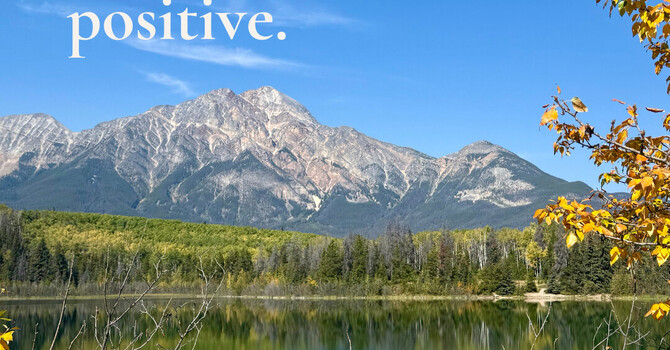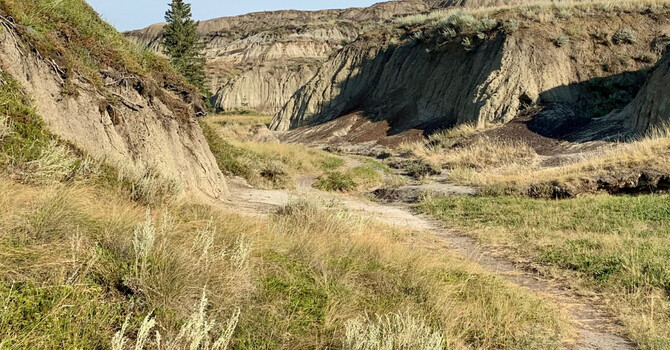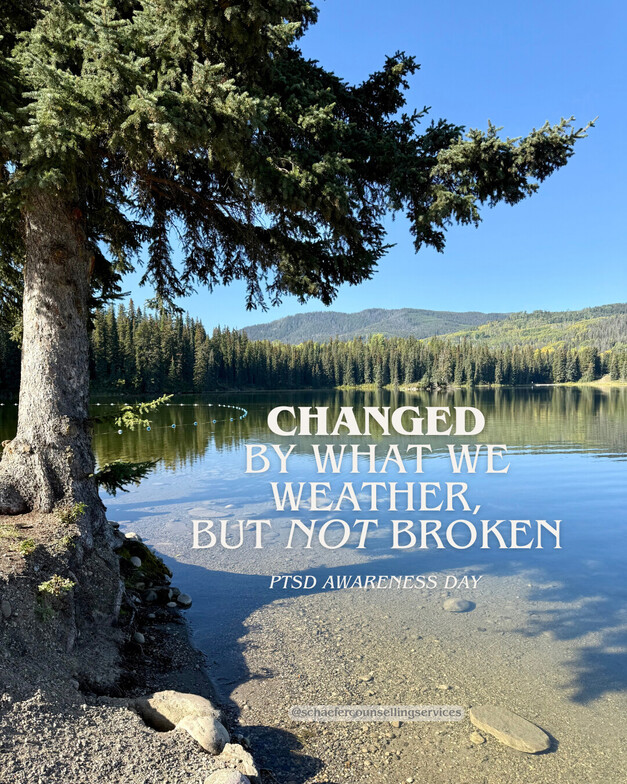
Last fall, while standing beside a mountain lake, I noticed a tree growing along the shoreline. Years of wind, water, and changing seasons had washed away much of the soil around its roots, leaving them exposed. Yet the tree remained firmly planted, shaped by what it had endured, but still standing.
The image stayed with me because trauma can feel much the same. Difficult experiences may leave us feeling exposed, unsettled, or changed. They can affect our sense of safety, our relationships, our bodies, and the ways we move through the world. Yet being affected by trauma does not mean we are broken. Like that tree along the water's edge, we may be shaped by what we have lived through, while still possessing the capacity for healing, connection, and growth.
Understanding the Invisible Impact of PTSD
Each year, PTSD Awareness Day offers an opportunity to increase understanding, reduce stigma, and honour the experiences of those living with Post-Traumatic Stress Disorder (PTSD).
PTSD can develop following exposure to traumatic events. While often associated with military service, PTSD can affect anyone and may arise after accidents, illness, loss, violence, abuse, natural disasters, or other deeply distressing experiences. The effects of trauma are often invisible, and no two individuals experience them in exactly the same way.
People living with PTSD may experience intrusive memories, nightmares, heightened anxiety, emotional numbness, changes in sleep, or a persistent sense of being unsafe. These responses are not signs of weakness or personal failure. They are understandable reactions to experiences that have overwhelmed a person's ability to cope.
Healing is Rarely Linear
One of the challenges many individuals face is the belief that they should simply "move on" or that healing should happen quickly. In reality, recovery is rarely linear. Healing often involves learning to reconnect with a sense of safety, rebuilding trust in oneself and others, and developing ways to navigate the effects of trauma with compassion and support.
PTSD Awareness Day reminds us of the importance of creating communities where people feel seen, heard, and supported. Reducing stigma begins with understanding that trauma affects each person differently and that there is no single path to recovery.
Therapy can provide a safe and supportive space to process difficult experiences and develop tools for living with the effects of trauma. For others, healing may also involve relationships, community, spirituality, creativity, movement, medication, or simply taking one day at a time. There is no "right" way to heal.
You Are Not Alone
If you are living with the effects of trauma, know that you are not alone. Your experiences are valid, your responses make sense in the context of what you have lived through, and recovery is possible.
Like the tree beside the mountain lake, we may carry visible or invisible signs of what we have weathered. We may be changed by our experiences. But being changed is not the same as being broken.
On this PTSD Awareness Day, may we continue to foster understanding, extend compassion, and honour the resilience of those walking the path of recovery.
Finding Support
If you or someone you love is navigating the lingering impacts of trauma, please know that you do not have to carry the weight alone. Healing happens in connection, and your story deserves a safe space to be held.
-
If you are feeling tender, overwhelmed, or ready to explore your healing journey, you are welcome to reach out to me here at Schaefer Counselling Services. Together, we can work at your own pace to find the ground beneath your feet again.
-
If you are in immediate need for support, please call 988, go to your nearest emergency room, or call 911. You can also access additional 24/7 crisis support resources listed here.
—Annika

Annika Schaefer
Contact Me