August is National Wellness Month—a time to pause and consider what wellness means to us and how we can make space for our wellbeing in our everyday lives.
The word wellness can sometimes bring to mind images of perfect routines, healthy habits, exercise, meditation, and self-care. While these things can certainly support our wellbeing, wellness is about so much more.
Wellness is about creating space for your whole self—mind, body, emotions, relationships, and rest.
And there is no single path to getting there.
Wellness Looks Different for Everyone
What supports our wellbeing can look different from person to person—and it can change throughout our lives.
For some, wellness might mean slowing down, setting a boundary, or creating more space for rest. For others, it may mean reconnecting with what matters, spending time with supportive people, pursuing something meaningful, or making changes that better reflect their needs and values.
Sometimes, wellness is about adding something to our lives. Other times, it is about recognizing what we can gently let go of.
There may be expectations, commitments, or habits that once served us but no longer fit where we are today. Wellness can involve giving ourselves permission to reassess and make room for something different.
You Don't Have to Wait Until You're Overwhelmed
It can be easy to put our wellbeing on hold.
We tell ourselves we'll slow down when things settle down, make time for ourselves when work becomes less busy, or reach out when things become more difficult.
But life doesn't always create a convenient time to pause.
Prioritizing your wellbeing doesn't mean you have to make major changes all at once. Often, it begins with simply paying attention—noticing what has been taking more from you than you have the capacity to give, and where you might create a little more space for rest, connection, or meaning.
Small, intentional choices can help us develop greater awareness of what we need and support our wellbeing over time.
Connection Is Part of Wellness
Wellness is not something we have to pursue alone.
Supportive relationships can be an important part of our wellbeing. Having people we can talk to, laugh with, lean on, or simply be ourselves around can help us feel connected and supported through life's challenges.
Sometimes, however, we may need support beyond what friends or family can offer.
Reaching out to a counsellor can provide a space to slow down, reflect, and explore what is happening in your life. You might be navigating stress, a life transition, relationship challenges, burnout, grief, or simply feeling disconnected from yourself or uncertain about what comes next.
You don't have to be in crisis to seek counselling. Sometimes, reaching out is simply a way of investing in yourself and creating space to better understand what you need.
Your Wellbeing Matters
There is no perfect formula for wellness, and there is no single approach that works for everyone.
What matters is developing an awareness of what supports you, what drains you, what matters to you, and when you might need support along the way.
This National Wellness Month, consider asking yourself:
What do I need more of right now?
What can I gently let go of?
Where can I create space for rest, connection, or meaning?
Who can I turn to when I need support?
You don't have to answer every question or change everything at once. Sometimes, simply creating a little space to listen to yourself is a meaningful place to begin.
Wellness isn't about perfection. It's about listening to what you need and responding with compassion.
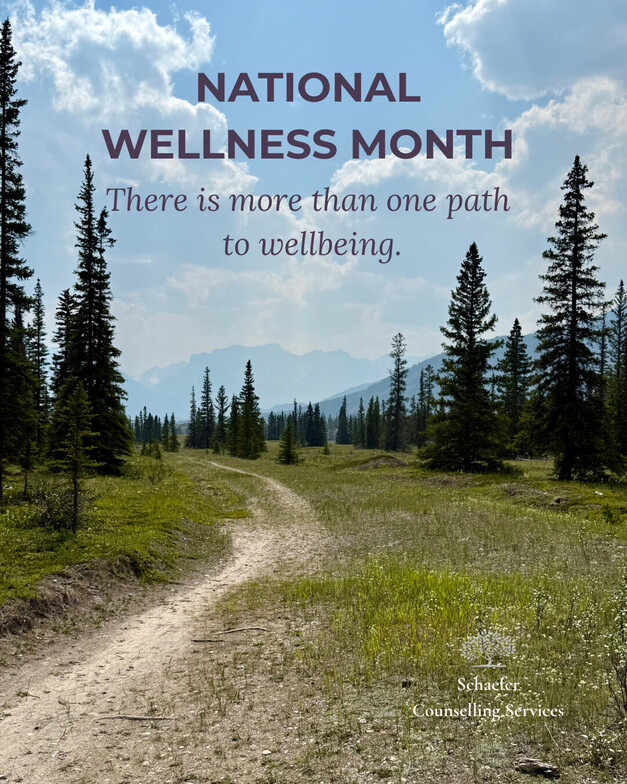
There is more than one path to wellbeing. Your path is your own—and you don't have to walk it alone.
If you're looking to feel more balanced, navigate life's challenges, or create sustainable change, I'm here to support you. Together, we can explore what wellbeing looks like for you and build a way forward that feels meaningful and sustainable.
—Annika

Annika Schaefer
Contact Me